From Web2 to Web3: What Wine Brands Actually Need to Know
Most wine brands do not need another abstract technology pitch. They need to know whether a new tool can help customers find them, remember them, trust them, and come back when it is time to book, join, or buy.
That is the useful way to think about the shift from Web2 to Web3. It is not a demand to replace your current website. It is a gradual expansion of what a digital address can do.
What is Web2?
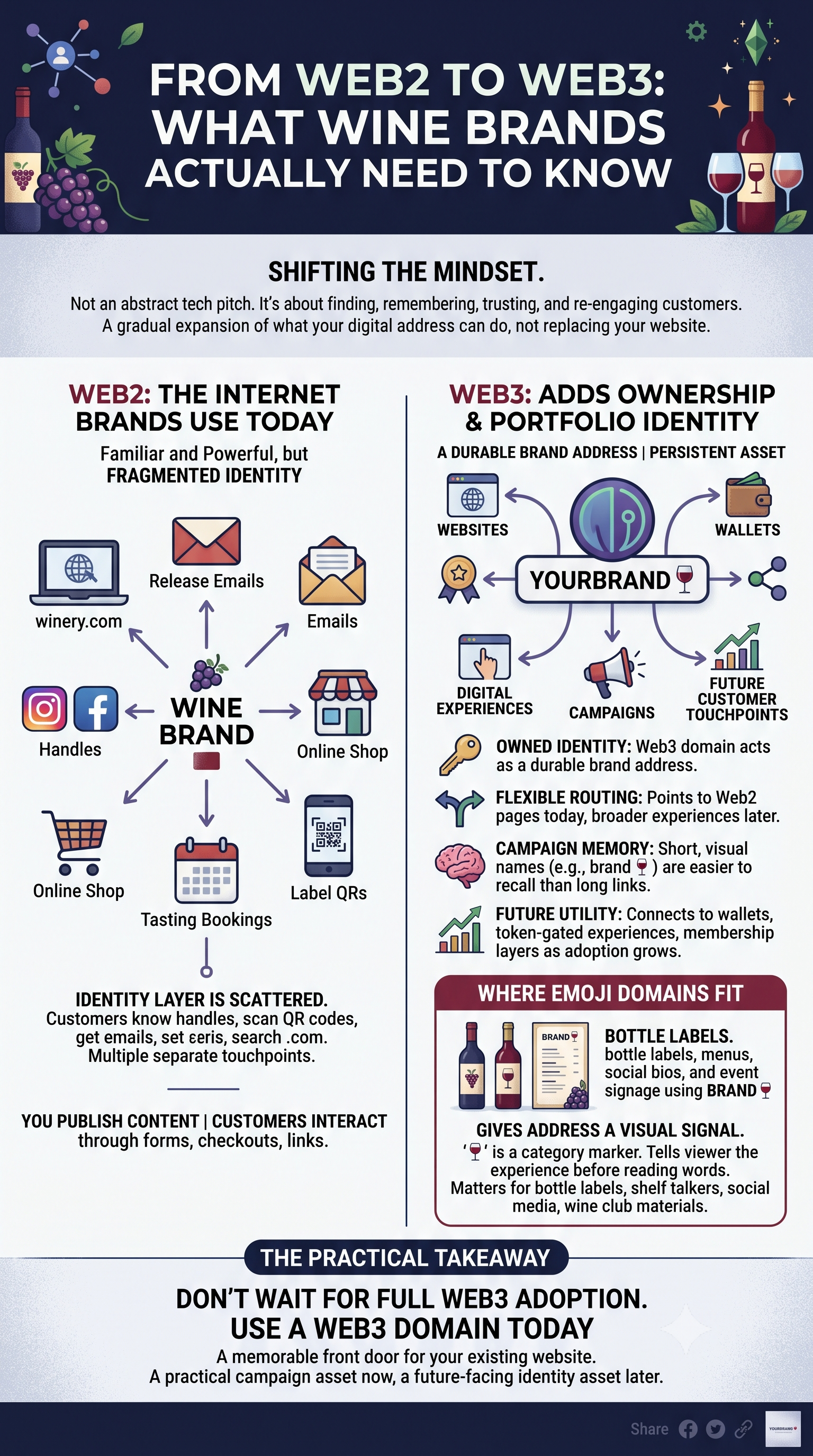
Web2 is the internet most brands use today. Your winery website, ecommerce store, booking page, email platform, social profiles, analytics dashboard, and advertising accounts all live in this world.
- You publish content on websites and platforms.
- Customers interact through forms, checkouts, QR codes, email links, and social profiles.
- Your brand identity is spread across usernames, domains, handles, pixels, and platform accounts.
Web2 is familiar and powerful, but it also creates fragmentation. A customer may know your Instagram handle, scan a QR code from a label, receive a release email, and later search your .com. Each touchpoint works, but the identity layer is scattered.
What is Web3?
Web3 adds ownership, portability, and identity to the internet. Instead of every platform holding a separate version of your digital presence, a Web3 domain can become a persistent brand asset that points to websites, wallets, digital experiences, campaigns, and future customer touchpoints.
- Owned identity: a Web3 domain can act as a durable brand address.
- Flexible routing: it can point to current Web2 pages today and broader Web3 experiences later.
- Campaign memory: short, visual names can be easier to recall than long links.
- Future utility: domains can connect to wallets, profiles, token-gated experiences, and digital membership layers as adoption grows.
For a winery, the first value is not asking guests to understand blockchain. The first value is making the brand address more memorable and more useful.
Where emoji domains fit
An emoji domain gives the address a visual signal. In wine, the 🍷 wine glass emoji ending works like a category marker. It tells the viewer what kind of experience the link belongs to before they fully read the words.
That matters in the places wineries actually market: bottle labels, menus, tasting cards, shelf talkers, postcards, event signage, social bios, QR companions, release emails, and wine club materials.
The practical takeaway
You do not need to wait for full Web3 adoption to use a Web3 domain. You can use it today as a memorable front door for your existing website. That gives the brand a practical campaign asset now and a future-facing identity asset later.